Battery Energy Storage System (BESS): How It Works, Benefits and Applications

As renewable energy adoption grows, energy storage is becoming essential. Solar and wind power are variable, so storing excess electricity allows it to be used when generation is low or demand is high.

The answer lies in a Battery Energy Storage System (BESS).

Battery energy storage is rapidly becoming a key part of modern power systems across industrial, commercial, utility-scale and residential applications.

What Is a BESS?

A BESS is an energy storage solution that uses rechargeable batteries to store and deliver electricity when needed.

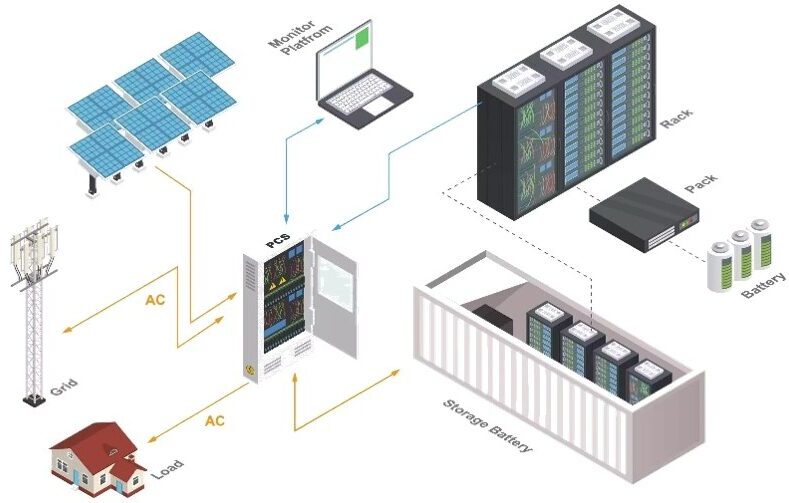
Battery Energy Storage System

A typical BESS includes:

  1. Battery modules, such as Lithium-ion or LFP
  2. Battery Management System (BMS)
  3. Power Conversion System (PCS)
  4. Energy Management System (EMS)
  5. Thermal management
  6. Fire protection system

Together, these components ensure safe, reliable and efficient energy storage.

  1. Energy Storage: Solar, wind or grid electricity charges the battery during periods of available or lower-cost energy.
  2. Battery Monitoring: The BMS continuously monitors voltage, current, temperature, State of Charge (SoC) and State of Health (SoH) to maintain safe operation.
  3. Energy Supply: When demand increases, renewable generation decreases or the grid goes down, stored DC energy is converted into AC power through the PCS or inverter.
  4. Intelligent Energy Management: The EMS controls when the battery should charge or discharge based on load demand, electricity tariffs, renewable generation, battery condition and grid availability.

Key Benefits of BESS

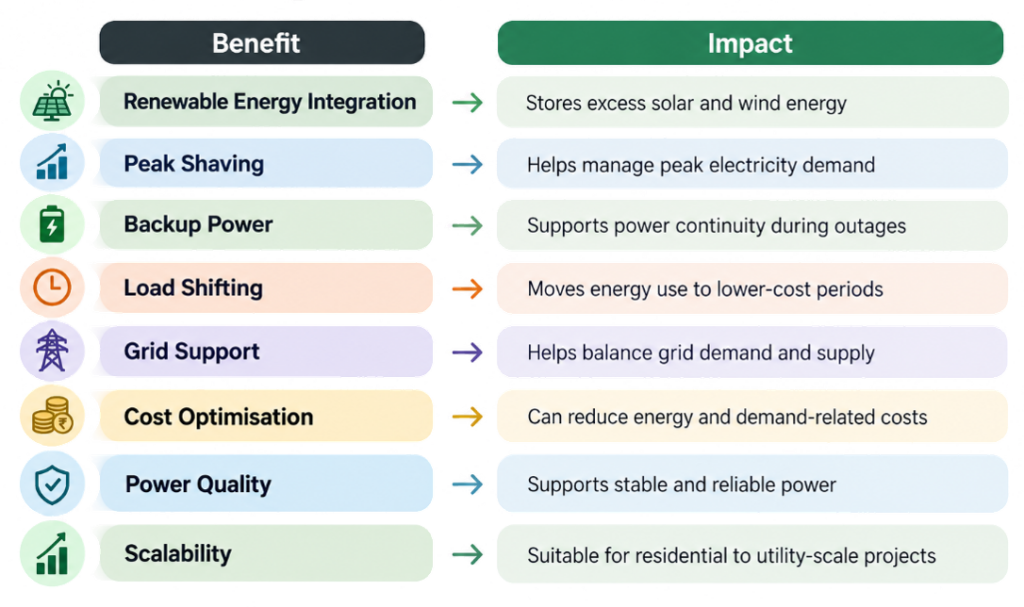
Renewable Energy Integration: BESS stores excess solar and wind energy for later use, improving renewable energy utilisation and reducing energy wastage.

Electricity Cost Optimisation: BESS can charge during lower-cost periods and discharge during peak-demand periods, supporting peak shaving, load shifting and demand-charge management.

Backup Power: A properly designed BESS can provide rapid backup power during grid outages for critical facilities such as hospitals, data centres, manufacturing plants and commercial buildings.

Grid Support: Depending on system design and grid requirements, BESS can support frequency regulation, voltage support, grid balancing and power quality.

Greater Energy Independence: BESS allows users to maximise self-generated renewable energy and reduce dependence on grid power or diesel generators.

Major Applications of BESS

BESS Users

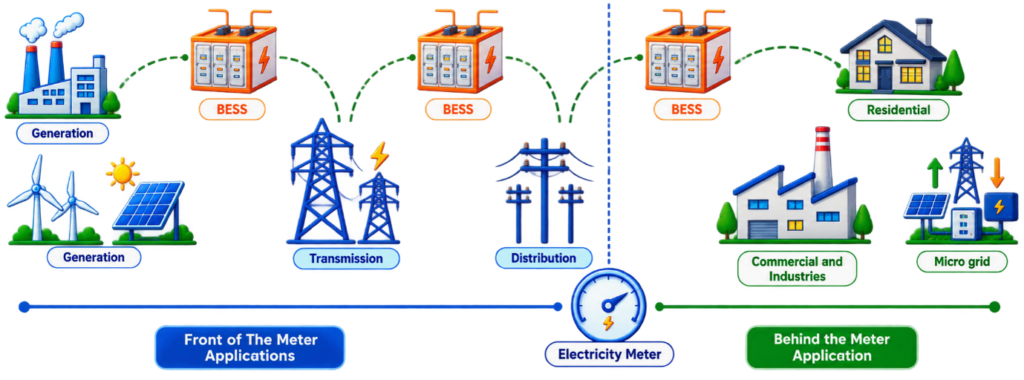
Behind the Meter vs Front of the Meter – BESS Users

Utility-Scale Energy Storage: Large-scale BESS projects help utilities balance supply and demand, integrate renewable energy and provide grid-support services.

Commercial & Industrial BESS: Commercial and industrial energy solution facilities can use BESS for peak demand management, backup power, energy-cost optimisation and renewable energy integration.

Solar-Plus-Storage: Combining solar power with a Battery Energy Storage System allows users to store excess daytime generation and use it when renewable generation decreases or electricity demand increases. 

Microgrids: BESS supports reliable and flexible power management for industrial campuses, remote communities, mining sites and critical infrastructure.

EV Charging: Battery storage can support high-power EV charging while managing peak demand and reducing grid impact.

Residential Energy Storage: Home BESS solutions can provide backup power, increased solar utilisation and improved energy independence.

Key Benefits of BESS

Frequently Asked Questions About BESS

What is the main purpose of a BESS?

The main purpose of a BESS is to store energy and make it available at the required time. It can be used for renewable energy integration, peak shaving, load shifting, backup power and grid support.

Can BESS work with solar power?

Yes. A solar-plus-storage system can store surplus solar generation and use it after sunset, during periods of higher demand or during a grid outage when the system is designed for backup operation.

Can BESS replace a diesel generator?

BESS can reduce diesel generator usage and, in some applications, provide an alternative source of backup power. Whether it can fully replace a generator depends on the required backup duration, load profile, system capacity and site operating conditions.

How long can a BESS provide backup power?

Backup duration depends primarily on the battery’s usable energy capacity in kilowatt-hours, the connected load in kilowatts, system efficiency and the permitted depth of discharge.

Is BESS suitable only for large industries?

No. Battery Energy Storage Systems are scalable and can be designed for homes, commercial buildings, industrial facilities, microgrids, EV charging stations and utility-scale projects.

Conclusion

A Battery Energy Storage System is more than a battery. It is an integrated energy solution that stores, manages and delivers electricity according to the requirements of the application. Whether used with renewable energy, deployed for backup power or designed to optimise electricity costs, BESS can improve energy reliability, efficiency, flexibility and sustainability. As the transition towards cleaner and more decentralised energy systems continues, BESS will become increasingly important in creating a smarter, more resilient power future.

Evaluating a Battery Energy Storage System for your facility? Connect with Team Feston to discuss the appropriate capacity, system architecture and operating strategy for your application.

Technical Review: Dr. Nisha Gnanam
Senior Product Specialist, Feston S.E.V. Pvt. Ltd.

wpChatIcon
wpChatIcon